Strategic Plan
Planning Boldly
Since 1888, EA has embraced new ways of fulfilling our mission.
Strategic planning provides a flexible – yet focused – framework for our future. It involves collaboration across our College and local communities to articulate a shared mission, vision, and set of values that will drive decision-making at Eastern Arizona College.

Message from the President
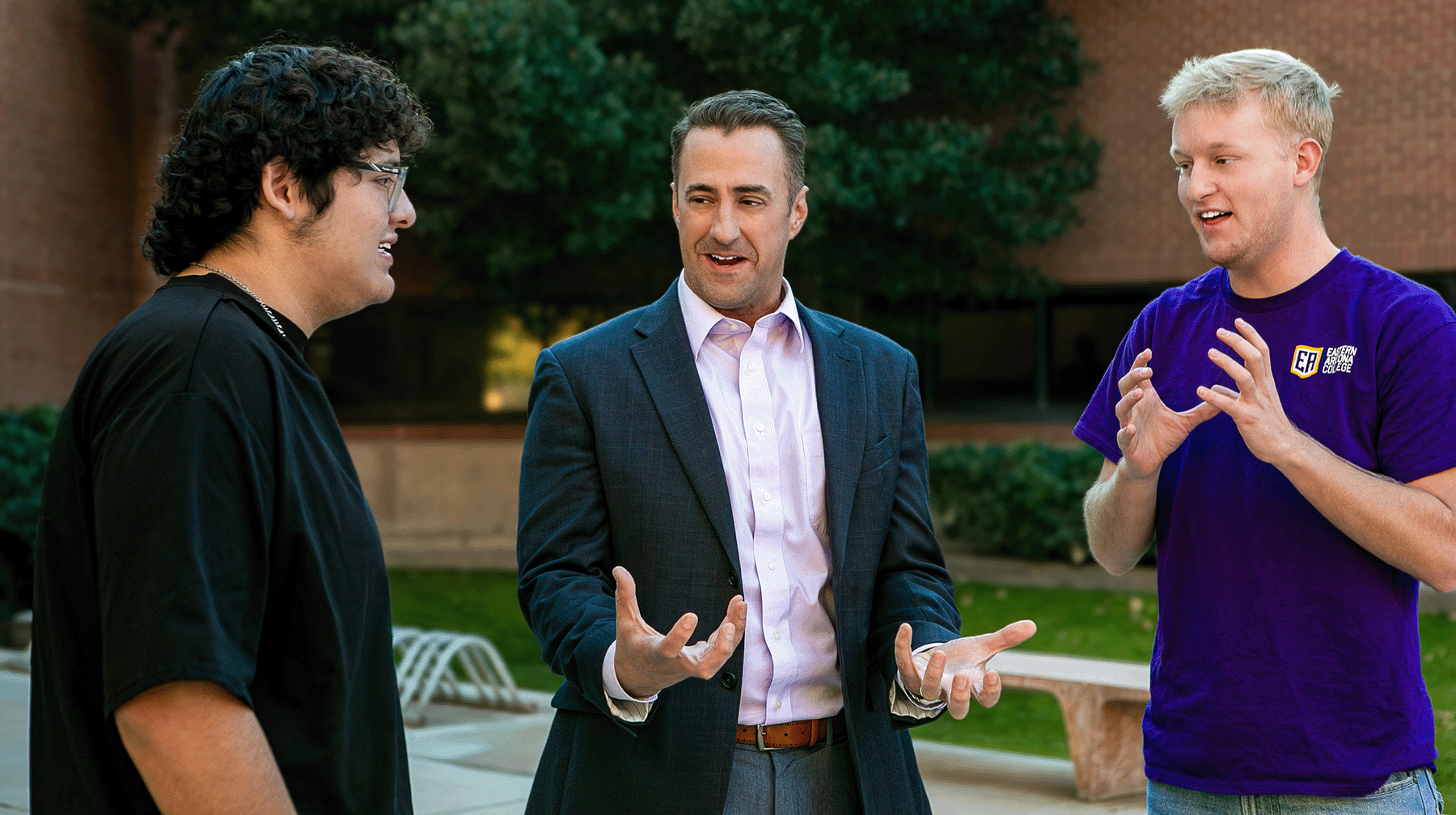
“I’m thrilled to share the 2030 Strategic Plan for Eastern Arizona College. Building on prior successes, this new roadmap reflects both who we are and who we aspire to be as we continue serving our students and region with excellence.
This plan is guided by my three presidential pillars—student success, community engagement, and fiscal responsibility. These pillars define our direction and remind us of what matters most: supporting every student in achieving their goals, strengthening our partnerships and impact throughout the region, and managing our resources wisely to ensure a strong and sustainable future.
The 2030 Strategic Plan is more than a document—it’s a shared commitment to continue building a College worthy of its remarkable legacy and essential to the future of our communities.”
— Todd Haynie
President, Eastern Arizona College
2030 Strategic Plan
Pillars of Success
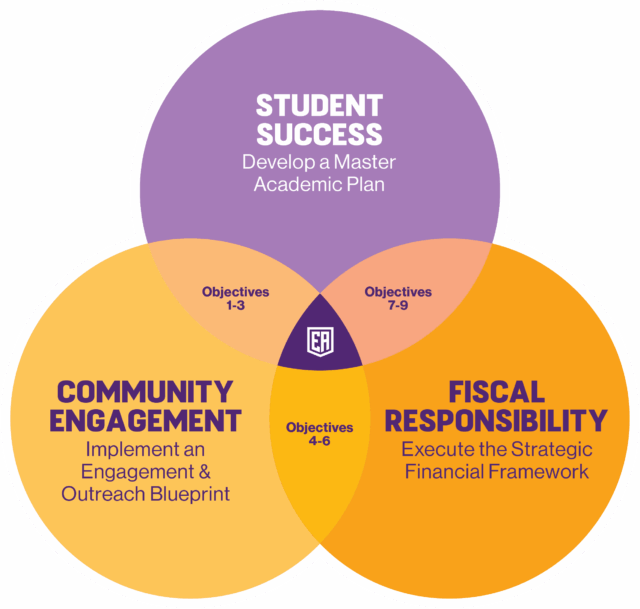
The plan is shaped by three presidential pillars:
- Student Success
- Community Engagement
- Fiscal Responsibility
These three pillars intertwine to create a cohesive and strategic whole.
-
Overview
This initiative focuses on transfer pathways, career readiness, and innovation in curriculum and teaching. By aligning academic offerings with community and industry needs, we empower students with the relevant skills and opportunities they need.
-
Objective 1: Workforce and Transfer Readiness
EA will build partnerships with industry leaders and expand dual enrollment opportunities to prepare students for success.
-
Objective 2: Innovative Curriculum Development
EA will pursue microcredentials aligned with workforce needs, expand bachelor’s degree offerings, and promote innovative teaching.
-
Objective 3: Student Lifecycle
EA will increase early college enrollment, strengthen student services, and launch a peer mentorship program to support first-time students and engage families.
-
Overview
EA’s community engagement and outreach blueprint deepens our community connections and communicates our value. This initiative elevates our visibility, fosters alumni and legislative partnerships, and ensures stakeholders understand our fiscal strength and educational impact.
-
Objective 4: Engagement Campaign
EA will simplify fiscal reporting to communicate our financial strength better and boost visibility through marketing and branding.
-
Objective 5: Alumni Connection
EA will strengthen our alumni network to support recruitment, scholarships, and community partnerships. Alumni involvement enhances mentorship, advocacy, and long-term institutional growth.
-
Objective 6: Community and Legislative Partnerships
EA will build relationships with key stakeholders through initiatives that bring our message directly to the community.
-
Overview
To ensure long-term sustainability and affordability for students, EA is implementing a strategic financial framework. This initiative focuses on optimizing systems, evaluating program viability, and expanding scholarship opportunities.
-
Objective 7: Enterprise Resource Planning Optimization
EA will enhance student and financial systems, establish ERP governance, and document standard operating procedures to improve efficiency and decision-making.
-
Objective 8: Strategic Institutional Planning and Reporting
EA will strengthen strategic planning and reporting to guide decision-making that advances student success and institutional sustainability. Through the Master Facilities Plan and key financial and enrollment indicators, the College will align campus resources, space, and programming with goals for growth, engagement, and impact.
-
Objective 9: Financial Accessibility
EA will reduce financial barriers by lowering the net cost of attendance and expanding scholarship opportunities. Affordable education is essential for equitable access and empowering students to pursue their goals.


I have great respect for my professors. I would describe our relationship positively, great communication, and a safe learning environment.
Andrea, from Rio Rico, AZ Studying Nursing
Learn More About Nursing